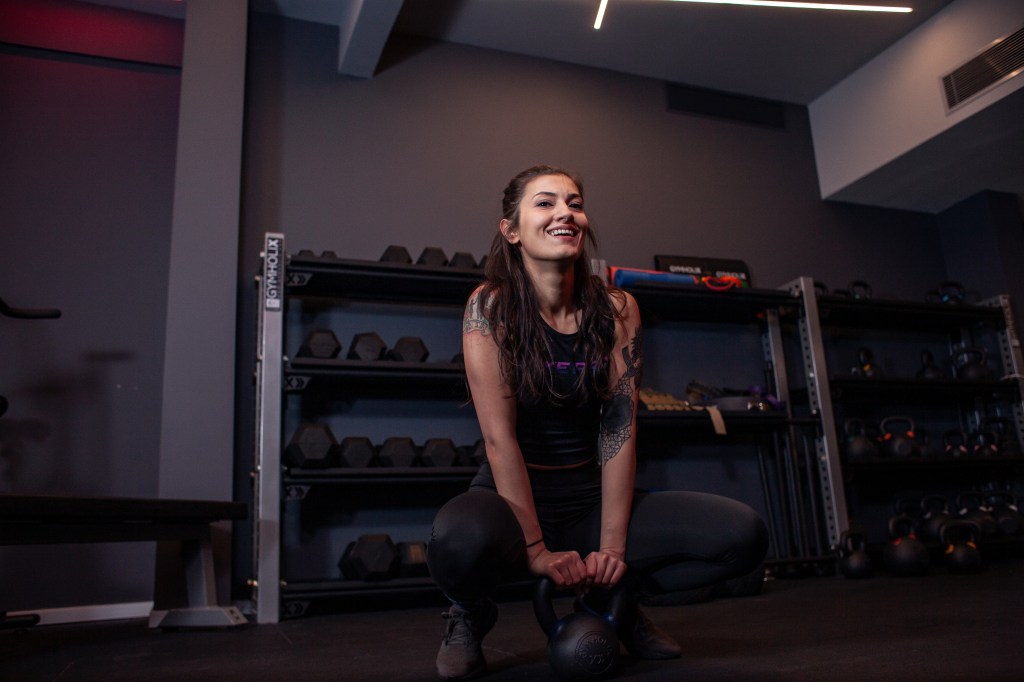
Why I Quit the Gym After 13 Years of Training and What I Found Instead: My “Sports” Journey in Motion
Part 1
For more than ten years, I trained to be strong.
I showed up at the gym religiously. I did my lifts, my accessory work, my conditioning circuits. I followed every program. Tracked every rep. Measured every inch of progress. I told myself I was building something.
And I was.
But it wasn’t strength, like I thought.
Not really.
What I was building, slowly and silently, was a cage.
The Myth of “Always Get Stronger”
There’s a story we’re sold, especially in combat sports; if you just get stronger, everything else will fall into place. You’ll be faster, more technical, more confident, less prone to injury. But that story leaves out something important: context.
Strength isn’t one thing and it certainly isn’t everything.
For more than a decade I did what every athlete was told to do: I lifted. I trained hard. I followed programs. Strength training became my language, my routine, my religion. Deadlifts. Squats. Pulls. Presses. Again and again. Week after week. Month after month.
And for a while, it worked. My numbers went up. My body got stronger. I moved with more force.
But eventually, something strange happened.
I stopped moving forward.
Not physically (though that too, in a way) but mentally and emotionally. The work started to feel stale. Predictable. Lifeless. I was training for strength, but not with purpose. Not for something. There was no dynamic challenge, no real world chaos. Just reps and sets in a fluorescent lit room. It didn’t matter how “functional” the gym programs claimed to be, nothing felt less functional than standing in place, lifting a barbell over and over, disconnected from any true expression of movement or creativity.
If it’s truly functional, what is it for? If it’s for life, then where is the life in it? There’s no function in dragging a sled across rubber turf if the only thing waiting at the end is another sled. I started to find it extremely dystopian how we “simulate the fight for survival in designated rooms to adhere to contemporary beauty standards.”
The Limits of Strength: Why More Isn’t Always Better
There’s also a cultural obsession in sports and fitness with always adding more: more plates, more power, more PRs. But here’s the truth nobody tells you: you don’t need to be endlessly stronger to perform better, especially in disciplines like Brazilian Jiu Jitsu. In fact, being too focused on maximal strength can actually work against you. Of course it’s good to have enough muscle mass to keep your joints intact but holding yourself back from other forms of movement is not a smart way to train, particularly if you are a combat athlete.
Why?
Because BJJ is not a weightlifting competition. It’s a fight. A live, unpredictable negotiation of balance, breath, timing and control. You’re not pressing a bar, you’re managing a resisting, adapting human body just like when you surf on top of the unpredictable waves of the sea.
That’s why strength endurance (your muscles’ ability to keep working again and again without getting tired, a continuity in strength) and isometric strength (ability to hold a position without moving, you’re not doing reps you’re holding firm) matter so much more.
These are the things that win fights. Not how much you bench but how long you can apply pressure, resist force or maintain control when everything in your body burns like hell and your mind stops working.
6 months ago I did my last session in the gym without even knowing it was my last session. I’m not saying I will never touch the barbell again but it’s obvious that I will take a looong break. It wasn’t a dramatic decision even though this blog post sounds like it is, it was just overdue.
If you are doing regular strength training or hitting the gym for gains please don’t take this post personal, because in the end it’s not strength training that is problematic it was my “obligatory” approach to it.
What I’m Doing Now: Plyometrics and The Joy of Training
Instead of doing just reps in a cage I started climbing again and doing isometric + plyometric sessions regularly, while adding some mid to long distance runs recently with some intervals and sometimes cycling. Just for the joy of movement itself, according to how I feel not what I’m obligated to. I began bounding, jumping, crawling, planking, holding, rediscovering the athleticism I once buried under a barbell.
Climbing provides a perfect training for grips, spatial control and dynamic balance. Plyometrics like jump squats and bounding lunges provide explosive strength, neuromuscular efficiency and enhanced reactive power essential for transitions of any kind while isometrics help me develop joint stability, deep muscle engagement and the mental stillness required to hold tension under pressure, a kind of strength that doesn’t rely on speed or momentum.
When I added plyometrics back into my training especially, something unexpected happened; it took me straight back to my childhood. Before I ever picked up a barbell, I was training like this without even knowing it had a name. I loved track running as a kid, played basketball and volleyball back to back for years and some of my most vivid memories are of climbing the entire stadium’s stairs with my teammates, doing single leg jumps, upward sprints, bounding drills that left our legs shaking and lungs on fire while we would die laughing on the floor. I guess hopping like a bunny was an extremely funny activity to us. We didn’t call it “plyo” back then. We just called it practice. But it built something real; explosive legs, mental grit and a deep connection between effort and joy.
Coming back to that now doesn’t feel like a regression, it feels like a return to what made me an athlete in the first place. Loading my legs with rhythm and power, I feel something cracks open. Not pain but recognition. I remember that little girl on the stairs, flying past her limits laughing, failing and trying again and again. That girl didn’t need to be told she was strong, she knew it. And now she’s back. Not to be trained, or reshaped, or silenced but to move with instinct, fire and joy.
The combination of these is doing wonders for me away from the gym. Not just physically, but emotionally. I feel like the old me again. My body is not just performing anymore, it’s responding. My training isn’t just “hard”, it is alive. I feel so grateful for taking this decision because after what happened in my life for the last couple of years, I was really feeling like I lost my urge to move freely forever to find joy in it again and “a couple of years” is a very long time just to visit the gym on a regular basis to decide, if I should quit or not?
The process that gave me this freedom started between 2023 and 2024 when I took the decision to ran two extremely focused 12‑week strength blocks specifically to put some mass on (after healing from my third covid and second pneumonia in just 3 years) jumping from 55 kg to 68 kg, then settling back to a comfortable 65 kg with an FFMI of 18 where I hover today and the surprise dividend is how “sticky” that strength has become.
Even after long breaks I don’t feel like my strength leaks away the way it used to; lifts that once vanished after two missed sessions now stay in my back pocket for long periods even if I don’t train at all. It’s as if adding those kilos finally gave my nervous system and connective tissues enough real estate to store force, proving that what I was missing all along wasn’t endless barbell sessions but simply a body weight my frame could actually thrive on.
Maybe I’m not training 3 times a day anymore but I’m aware that what I built over the years will always stay with me, it will just need some polishing from time to time and all I need for this is an “extremely minimalist” heavy‐lift touch. The real transformation happened not just through the lifts but through the recognition that strength isn’t just about the numbers; it’s about having the right foundation to move through life.
— A.
you can follow the rest of the story here ↓
 melikeagansoy.com