Why I Quit the Gym After 13 Years of Training and What I Found Instead: My “Sports” Journey in Motion
Part 2
Looking back now, I realize I didn’t just drift away from my body after I started Brazilian Jiu Jitsu and strength training, I was pushed out of it slowly and subtly by the training methods that claimed to be “saving” me. The environment I chose and what I thought was structure became a cage for my body and my mind. Getting scared by the glorious stories of injuries, I sticked to whatever my coach told me.
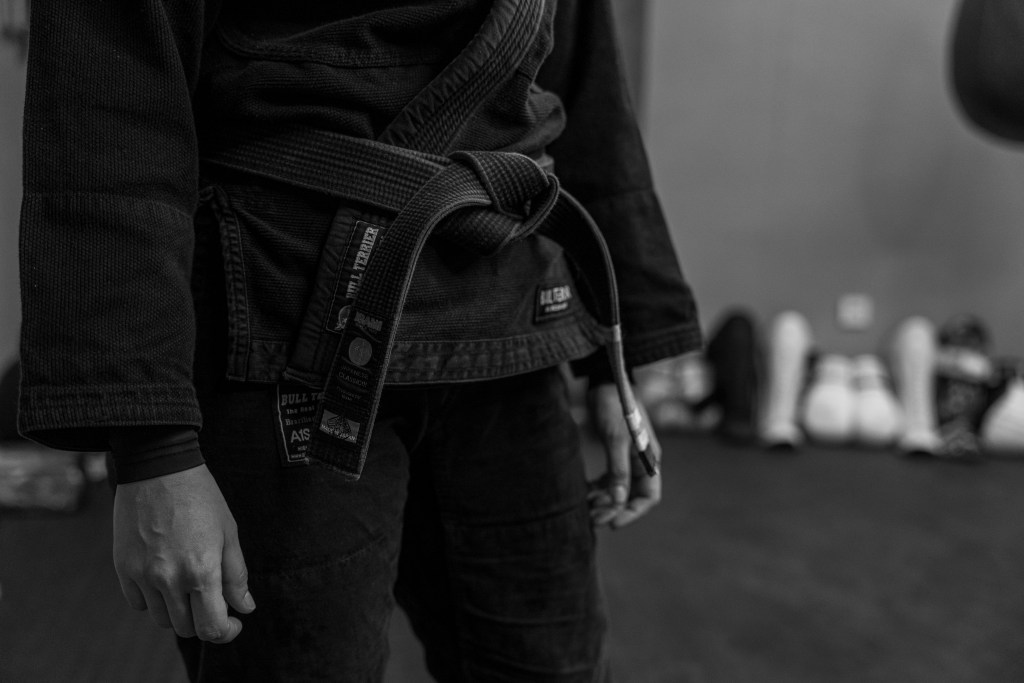
The first time my hands touched a barbell was when I first entered the Brazilian Jiu Jitsu gym because as it was claimed and repeated since day one; I was way out of shape, I wasn’t strong and looking athletic “enough.” With time over the years I would never know how strength training could turn into isolation work, focused solely on appearance rather than real strength building.
I was weighed constantly and reminded to stay under 55kgs, the food I eat was always criticized, but no one was mentioning that I had to gain mass first in order to produce strength. Real strength requires the body to grow so strength can have a physiological basis, because permanent and sustainable strength gains are not possible without increasing muscle mass, building sufficient glycogen stores and adapting the nervous system for high-intensity loads.
However, while the fact that I was weak reiterated, this scientific fact was constantly ignored and it was suppressed with the expectation that I should “look more athletic”, the aesthetic pleasures of others were taking precedence over my athletic performance. I would later understand that the purpose of this program offered to me was not to unleash my potential, as it was claimed.
I don’t remember any period in my life where I achieved so much but felt like I was failing all the time.
What saved me mentally and physically during this period was the mobility work I did for my body and getting into climbing. These were the only two activities where I was truly alone, able to practice and enjoy movement on my own terms. They gave me a good variety of movement patterns except pulling and pushing most of the time.
Mobility work kept my “fragile” body almost injury free (a crucial point if you consider all my training partners were +30 kgs heavier than me) and allowed me to maintain a sense of fluidity and control over my body, offering a bridge to reconnect with my “physical self” free from the rigid structures imposed by external expectations.
Climbing on the other hand, brought a sense of play and exploration back into my routine, it offered another challenging yet rewarding way to test my limits. What I realized when I first started climbing was that for the first time in years I started to feel like I was regaining my autonomy and control over my body, finding my own rhythm and breaking free from the narrow standards that defined me by other people’s limited perspective. Another point that hit hard was while others were calling me “physically weak” on the mat and at the gym, my climbing partners were calling me “strong as hell.”
Looking back, I can clearly see that the problem wasn’t the activities themselves, it was the approach to “so called” excellence and perfection that my coach instilled in me. I tried so hard to adhere to his standards even when he wasn’t living up to them because I valued him and what he was doing more than I should have.
At 21, when I first joined the team I thought I had found a path back to myself. It was around 2012 and I was hungry for purpose, movement and discipline like almost all of my peers because I quit volleyball and drawing at the end of high school, abandoned my dream of studying fine arts and picked up smoking. Not to mention my extremely bad mental health, eating just once a day and having tachycardia because of all the stress I was going through at that time.
I wanted to belong and now I can see clearly how that desire made me vulnerable. I guess I was easy to rewrite for people who wanted to position themselves as someone’s savior.
The ghost of the past wasn’t leaving me alone, transitioning from high school to college wasn’t working so well for me except working at a bookstore and I was just so grateful that I found the strength to try a martial art again and that my path crossed with the amazing sport of Brazilian Jiu Jitsu. For me all of this was about my belief that discipline and devotion would eventually give me my power back after feeling lost for so long.
But it never did. Because it was never mine to earn. It had been mine all along.
Discipline and Belonging
The elements of discipline and belonging played a significant role in shaping my Brazilian Jiu Jitsu journey but in hindsight, I realize that it also held me back from fully owning it. Discipline became a double edged sword, on one hand it was the framework that I believed would bring me order and strength but on the other it trapped me in a cycle of external expectations.
I was so focused on adhering to the rigid standards set by my coach, believing that strict devotion and perfection would lead to growth, that I lost sight of what my path actually looked like or should look like. I was just running in circles while working like a slave, fighting a monster I could never satisfy, training night and day while managing the obligations of the team full time.
During this process discipline became a performance, an act of aligning with someone else’s vision of what excellence should be. This constant striving to meet an ideal, to embody someone else’s definition of success, prevented me from embracing my own intuition and self-expression in movement.
You know those moments when people put you in positions, where you question your own intuition and then they tell you to trust theirs because they have more experience and competency than you. It’s that quiet negotiation between intuition and authority. Experience used as a weapon under the guise of guidance, knowingly or unknowingly, silence your true knowing with time.
But somewhere along the line, I stopped hearing my own voice. I began to distrust my feelings, to question them more than I should and to pause long before expressing my thoughts every time I wanted to speak. It’s a strange feeling, when someone’s confidence makes you unsure of your own clarity and breaks your inner compass. What stayed with me wasn’t anger, it was the quiet erosion of self-trust. Rebuilding that trust meant learning to listen to myself again. Perhaps what we call strength is, at its most basic form, is the courage to hear that voice again.
Similarly the need to belong played into this dynamic. I was desperate to find my place, to feel connected to something larger than myself and to be part of a group that could give me purpose. This desire to belong made me easily susceptible to the idea that someone else could define my worth and value. I allowed myself to be rewritten, to accept that someone else’s standards and narrative could be the blueprint for my own success. I thought that by fitting into these preordained molds, I would gain my power and my voice back.
What I failed to realize at the time was that by seeking external validation through belonging, I was giving up the very autonomy and authenticity that could have allowed me to truly own my journey. But can I complain? It was all my choice. If I could go back in time, there is only one thing that I would tell my old self; move, don’t train.
The Definition or The Approach?
As I reflect on this long journey, I go back to the day of the “talent exam” for admission to the sports management department at a private college, initiated by one of the country’s biggest sports communication agencies. If I was lucky enough I could win the full scholarship, that was my goal because I had no funds to pay for one of the most expensive schools in the country. I was 25 at that moment, freshly healed from a knee injury that resulted in a serious atrophy on my left leg and also a newly promoted purple belt who can win against advanced brown belts in competition, with only 3,5 years of mat experience. I also gained a lot of knowledge over time while I worked for the communication and marketing of the team. Imagine how sure of myself I was. The reason I decided to study in this department was to gain other professional approaches and tools that I could use to make Brazilian Jiu Jitsu more visible because I was so in love with the sport.
I remember sitting on a chair at a round table in the agency, facing 8 people who surrounded me in a C shape, all of them at the top of their careers either as scholars or communication experts. They asked me to briefly introduce myself and then came a question from the country’s foremost figure in recreation: Dr. Ümit Kesim, aged more than 70 years old, who would later become one of my professors as would the rest of them. He asked “what is the difference between movement, sports and exercise?” a question that still echoes in my mind, a topic that I have never questioned in my life before.
I could feel my palms getting sweaty and I rushed to define what sports mean but he cut me in the middle, he said “I’m not asking you to define them, tell me, what could be the difference between them?” I answered, very unsurely, “the approach?” he said bravo with a huge voice, it was the sweetest bravo I heard in my life. After this part the conversation started flowing but I felt ashamed because I really didn’t know what these things meant in their true definitions.
I now understand it is easy to learn the definitions and memorize them but to understand their context and how they relate to each other requires a different perspective, this is what I learned from them and I am so thankful for the opportunity. Especially to my professor Cem Tınaz, who contributed to the opening of this quota. I know you are wondering if I got the scholarship. Yes, I did 🙂
Thanks to that question, with time I become more aware of the huge differences between moving, exercising and participating in sports, not as definitions but as approaches or modes of engagement and how they resonate with me. That question was definitely a wake up call. For a long time exercise became my sole focus, an endless cycle of structured routines designed to optimize my body’s output. I followed the programs, tracked the metrics and believed that pushing my limits was the key to success. But I had forgotten that movement, the very essence of physical expression, was what I truly craved.
Sports on the other hand, brought a competitive and social element into the equation. It became a game of strategy, rivalry and engagement with others. I learned that while sport can serve as a form of exercise, it’s true power lies in its ability to bring people together, to test skill and to navigate the complexities of competition. But even in sports, I began to feel the tension between achieving external validation and expressing my own true movement.
The real shift however, came when I allowed myself to rediscover movement in its purest form. Movement is not confined to the rigid structures of exercise or the competitive frameworks of sport. It is a spontaneous, expressive and functional action; rooted in joy, creativity and exploration. When I returned to plyometrics and climbing I felt the freedom to move just for the sake of moving again. I reconnected with the childlike joy of motion for the sheer pleasure of it because I had no other goal than having fun. This return to movement reminded me that our bodies were never meant to be mere machines of performance. They are meant to be expressive, to move through space with purpose, to play and engage with the world around us.
Ultimately I discovered that fitness, with all its metrics and goals, can only take us so far. It confines us to a box where movement becomes a task rather than a celebration of existence. True strength is not about how much weight you can lift or how many reps you can complete; it’s about how freely you can move, how deeply you can connect with your body and how joyfully you can express yourself through it. My journey has taught me that movement, in all its forms whether for sport, exercise or pure exploration, is the foundation of a truly fulfilling physical experience.
And that above all, is what brings me back to my body every day.
— A.
you can follow the rest of the story here ↓
 melikeagansoy.com
One response to “MOVE. DON’T TRAIN.”
[…] MOVE. DON’T TRAIN. […]
LikeLike